

Elizabeth 1 depicted through metaphors!

Written by Charley Stent
In a time of male power Elizabeth needed her image to reflect the same power past monarchs had held. Over her reign and hundreds of paintings later a method seems to of been born. Elizabeth 1 was an extraordinary women with a highly educated mind. She indulged in subjects which aided her reign and power and throughout her life would allow her to rule with wit and the knowledge of her peers. Elizabeth spoke and read seven languages including; Spanish , English, Greek, Hebrew,German,French, Latin. Of course being able to converse and read in seven languages proved very useful to the young queen. This ability would of allowed Elizabeth to converse with nations in there natural tongue easing the process but i wonder if like her father she spoke in Latin to discuss important matters. Her father Henry VIII, deemed English to be to common to discuss such matters and as such only spoke the dead language of Latin to Cardinal Wolsey when speaking about the utmost of important subjects.
Unlike other monarchs of the Tudor period, Elizabeth wasn’t keen on sitting for her portraits and found that their content was way more important than their likeliness or her features. We only have portraits of her looking relatively the same because once a portrait had been approved by the queen other artists would copy her features and poses hence creating a continuity within her portraiture. This again tells us that at her core, Elizabeth 1 or the Virgin Queen understood the power she could convey in her paintings and this is why in each piece we have multiple symbols of her power and status she held as queen but also whilst she was young we can see instead of her power and status being highlighted her knowledge and nobility are drawn upon instead. An interesting reflection which adapted with her as she aged.
If we start with young Elizabeth through her portraiture. We can see the stage in her life after her mother’s death ( Anne Boleyn) when she was made illegitimate by her father (Henry VIII).

Painted in 1546, this portrait of Elizabeth became the first recorded painting of her half brother’s collection. Although this is an interesting feature, the heavy symbolism of the church and women’s roles of the time catch my attention more.
At just 13 years old, she is depicted wearing a crimson gown decorated heavily with pomegranates, a symbol of fertility. Although this is not a shocking age for this to be depicted it shows the strength the church held on a woman’s purpose. That purpose to become mothers and raise the children. A purpose we know Elizabeth never fulfilled as the queen of England.
This portrait shows Elizabeth holding a book and another in the background, which many historians agree probably symbolise the new and old testament of the Bible.
Painted in 1546, this portrait of Elizabeth became the first recorded painting of her half brother’s collection. Although this is an interesting feature, the heavy symbolism of the church and women’s roles of the time catch my attention more.
At just 13 years old, she is depicted wearing a crimson gown decorated heavily with pomegranates, a symbol of fertility. Although this is not a shocking age for this to be depicted it shows the strength the church held on a woman’s purpose. That purpose to become mothers and raise the children. A purpose we know Elizabeth never fulfilled as the queen of England.
This portrait shows Elizabeth holding a book and another in the background, which many historians agree probably symbolise the new and old testament of the Bible.

This portrait again represents her womanly role, we can allude the cherry on her right ear is a reference to the status of her virginity. But this portrait is different although the symbolisation of her status as a royal is very strong as we can see my the amount of Tudor roses scattered around the paining. We can instead see this painting to be about self sacrifice and her role as mother to the country. As we know from her other portraits such as the Rainbow portrait which i will touch on later, Elizabeth has a sense of motherhood for her nation which she overlooks and nurtures as it grows. However in this painting the pelican on her chest is what leads us to this analogy. Pelican’s sacrifice themselves and take from themselves to help feed their young, but in this case we can suggest Elizabeth is showing she takes a piece of herself to look after the nation, a reflection of her love i suppose.
Along with showing herself in a motherly role, this portrait also suggests Elizabeth was ‘ in search for a partner’ someone we know wouldn’t exist but for the symbolism would suggest the steps for building a stronger reign and nation that would soon gain a king and possible heirs. A much needed and expected event in Elizabeth’s life.
To me this is the ‘calm down’ and ‘don’t worry’ portrait of Elizabeth and my analogy of it, is that it was probably painted to show the illusion of these steps to help calm any building panics amongst the people. Remember Elizabeth was one of the first female monarchs and power and leadership roles as big as leading a country was and had always been given to men. However of course i could be wrong with how i see this painting but since i know/read that Elizabeth stated from early age that she would never wed this seems like the only way to explain the paintings meaning.
Now moving onto my favourite paintings of Elizabeth, we can see in the Spanish armada the heavy symbolism Elizabeth likes, unlike the other portraits which just have small hints to her status and power. This portrait is all about showing off as the victor of the Spanish armada and thus laced appropriately throughout.
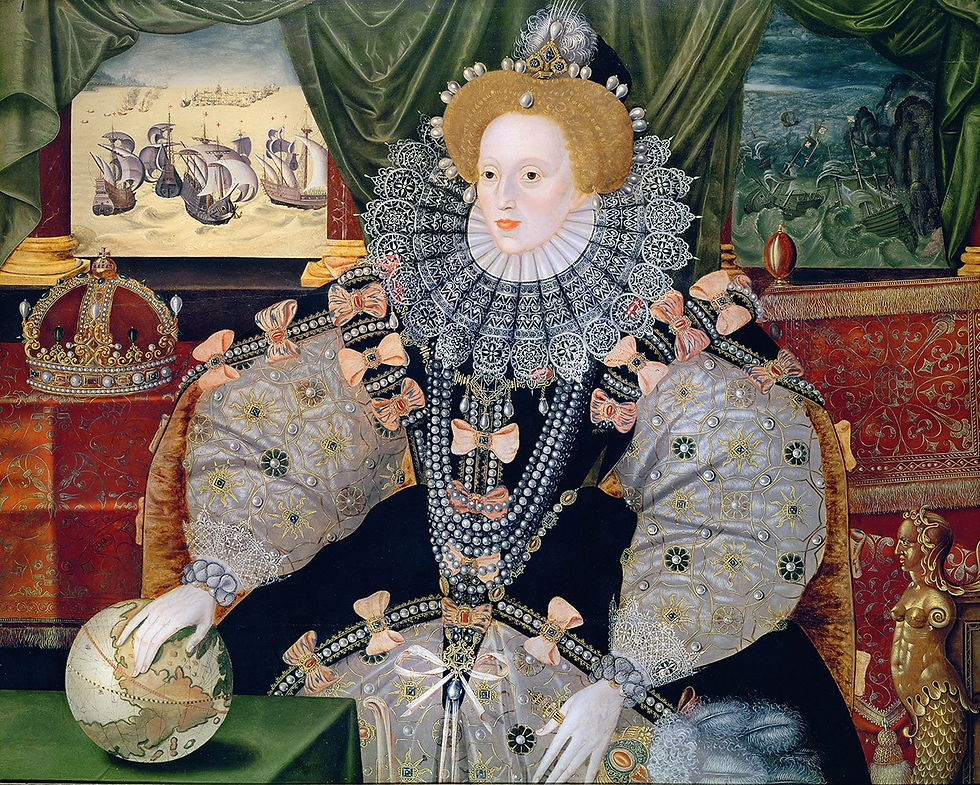
As well as being seen as a person of high status and power, her peals indicate her purity which i find is a nice balance between all the power. Under Elizabeth’s right hand is the globe, specifically she is pointing to Virginia in america which was named after her. This could indicate her power or the want to take power over america. However the part of this portrait i favour the most is the scenes from the battle and how Elizabeth is positioned in the piece. If you look over her right shoulder you will be able to see the rough and dark imagery connected with the Spanish and over her left the calm and gentle image from the English. In a way its like she cant even see the Spanish, she quite literally has her back to them. Her expression is calm and unfazed which again amplify her power over them. Another interesting feature to me in this piece is in the bottom right corner. The gold mermaid stands again facing in the same direction as Queen Elizabeth 1 and her troops and perhaps indicates a leadership over the oceans as well but if we dig deeper and look at core of a mermaid they are known for tempting sailors before leading them to their demise. Perhaps this is also what Elizabeth wants to convey as another symbol of her power as the Queen. Leading into my next point which is the imperial crown which is a blatant symbol of her succession as Queen but also the roots of the Tudor dynasty which again strengthened her power even more.
As Elizabeth aged, the symbolism in her portraiture started to add unrealistic and impossible features such as the rainbow in the famous rainbow portrait.

Unlike other portraits, Queen Elizabeth’s portraits are not to trick the viewer into believing she looks a certain way but again to show of her power. We know this as all the viewers would of been personally selected and therefore they would know what the queen looked like. This particular painting was done in 1600 and the painting was done to inspire and intimidate as well as show of her wealth and power. Going back to the fact the painting was done in 1600, we know Elizabeth didn’t look as youthful and flawless as she does in her painting as she died just 3 years later in 1603 aged 70. Elizabeth wouldn’t have possibly had perfect skin due to her age and possibly a rash from the poisonous lead face power she used daily. To analyse this image further i want to direct you to the eyes and ears carefully embroidered onto her clothing which could imply she is omnipresent or that she sees and hears everything.
Which shows her great power over her country and all of her subjects. The snake on her sleeve symbolises her wit and cunning personality. It is shown to us again in this portrait how much Elizabeth likes to show off her wealth and power by wearing vast amounts of expensive jewels and fine fabrics. However the main feature of this portrait is the rainbow she has clutched in her hand, an impossible act. This feature is like our modern day Photoshop it isn’t actually there! We can link the rainbow to the Bible. Specifically Genesis, in Genesis the rainbow symbolises Gods promise to never destroy the earth again however it also has links in the Bible to atmospheric beauty and in Genesis 9:13 God says it is my bow. This can be linked directly with how Elizabeth is holding the rainbow much like a bow, the rainbow can also be seen as a link between God and the earth and therefore shows Elizabeth in a high position of power that she is able to hold the rainbow.! Much like how Captain America is able to lift Thor’s Hammer.
I feel like the rainbow portrait’s intentions and symbolism link perfectly with the poem “The Long Queen - By Carol Ann Duffy “ This poem to me fully captures what it was like for Elizabeth to both be the ruler but also a woman, a mother figure but also it captures the struggle to keep her status.
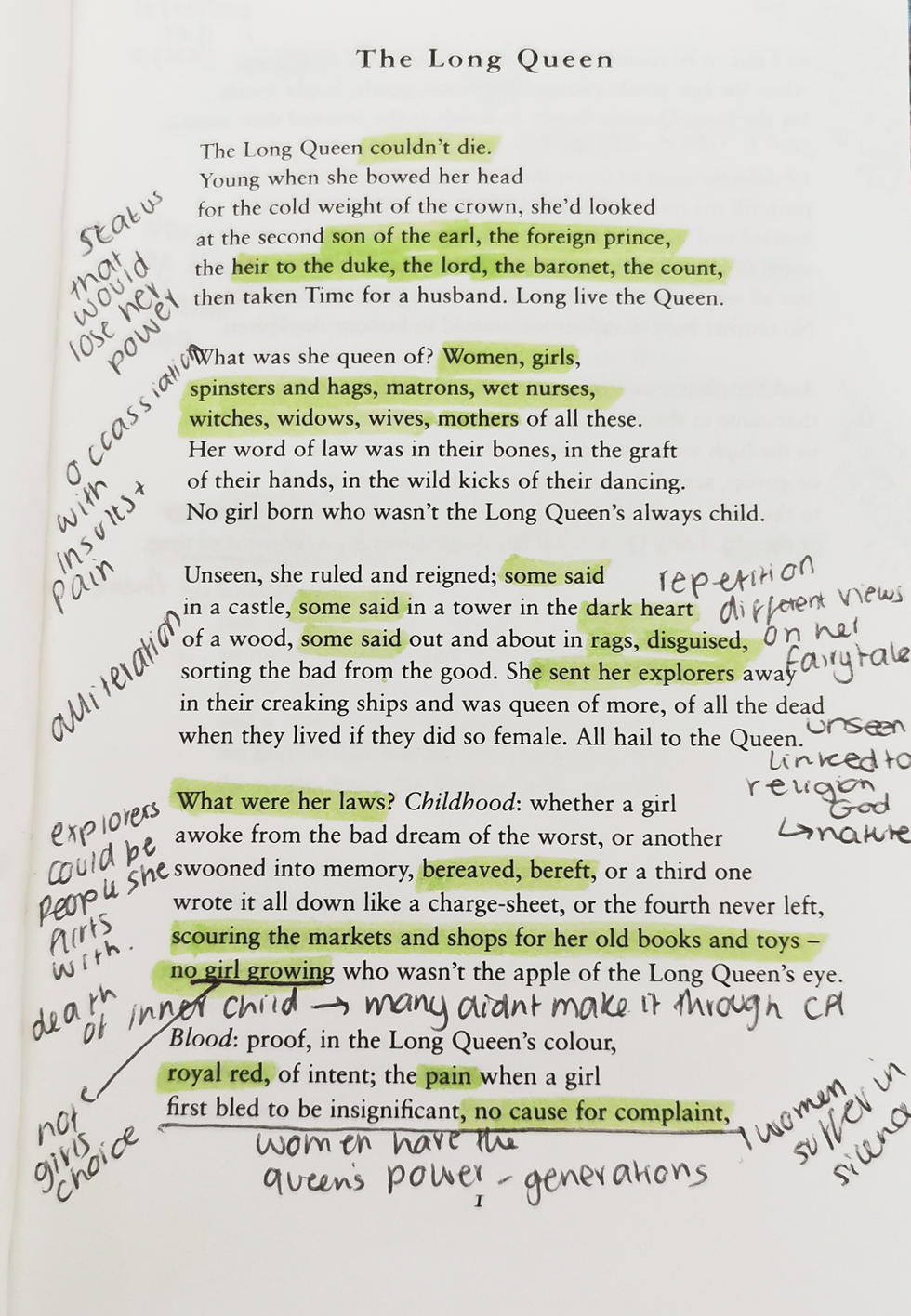
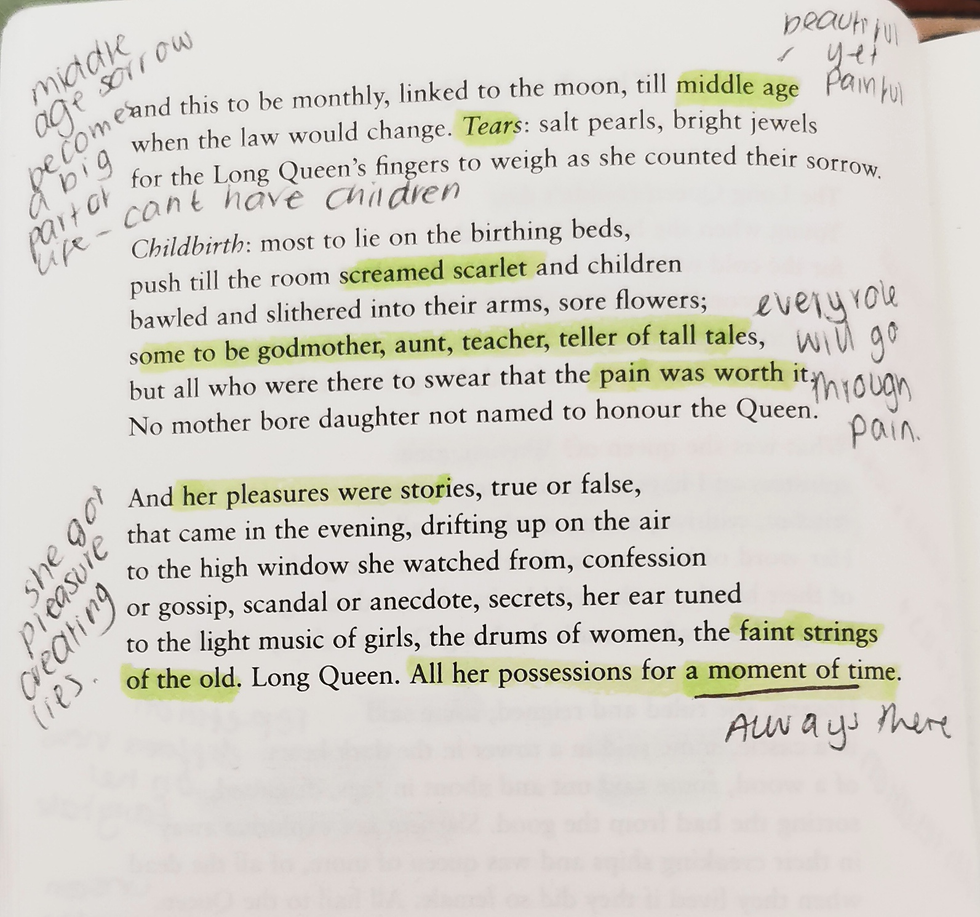
( My analysis of the long queen by Carol Ann Duffy)
I hope you have enjoyed reading this! Please let me know if you have, id love to hear any feedback :)

Comments