

Histories young victim who tragically lost her life for failed political gain in 1554

Lady Jane Grey
Written by Charley Stent
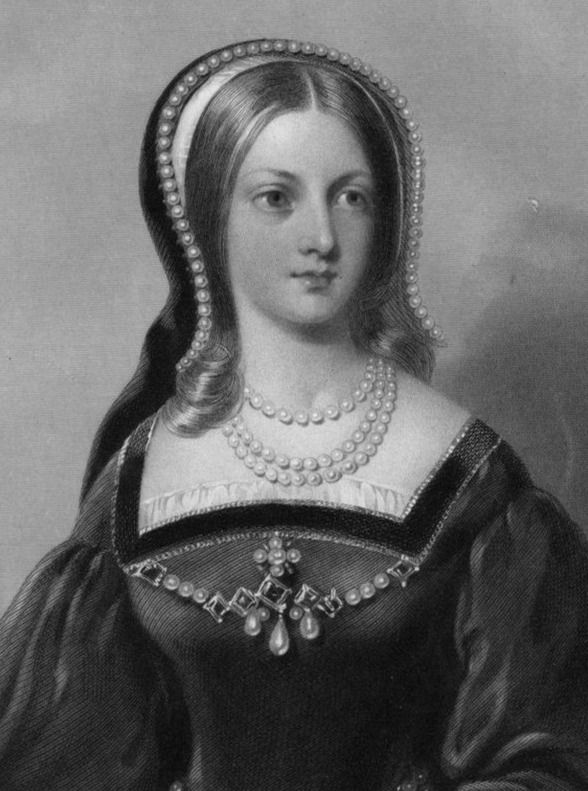
You may know her as the nine day queen. But I know her as Lady Jane Grey. A young teenager who unfortunately came to the throne against her will in 1553.
Her early childhood is happy and pretty usual for the Tudor Period. Growing up in Bradgate house which now stands as a ruin in rural Leicestershire before moving to London to be Catherine Parr’s lady in waiting.
Jane was seen as one of innocency a trait which unfortunately led her to become easily manipulated by her elders. Her parents reportedly would pinch her skin as a form of punishment and John Dudley saw her only as a pawn.

However Jane was always partial to the social norms of the time and often preferred to dress more modestly and wasn’t at all interested in taking the throne and would rather sit alone surrounded with literature. Behaviour we see from her time in the tower .Her abstract view on life only made her more of an issue for John Dudley who planned to use her to get to the throne by marrying her to his teen son Guildford Dudley. Although he succeeded with the first half of his plan, the throne would never be in his grasp.
Today, we aren't taught about Lady Jane Grey and she isn’t even listed as a monarch from the times. But without her political sacrifice perhaps the way England evolved would of been very different. Jane was selected not only because of her mother Frances ( Henry VIII’s niece) gave her a direct claim to the throne but because of her dedication to the protestant faith which led Edward VI the young dying king to select her as the next monarch.
But why did she die?
Jane was sentenced to the tower before Mary I had even fully arrived to London after getting the country to back the “ rightful heir”. The July she was suppose to spend in the tower preparing for her coronation turned into a prison sentence. One we know she would never escape. Mary however didn’t sentence young Jane to death at first and instead gave her the opportunity to retract her faith and convert to Catholicism whilst housed in royal lodgings at the tower. It was only when now 17 year old Jane refused and continued to pray to her God that Mary decided to sentence her old friend to death using the Privy Council’s advice on the matter.
Thomas Wyatt’s rebellion also had a part in Jane’s death as it made her more of a threat to throne. The young couple were beheaded at the tower in February of 1554.
Carvings of the families mark and Janes name can still be seen at knee height in the tower today, evidence we can only presume Guildford made before his death.
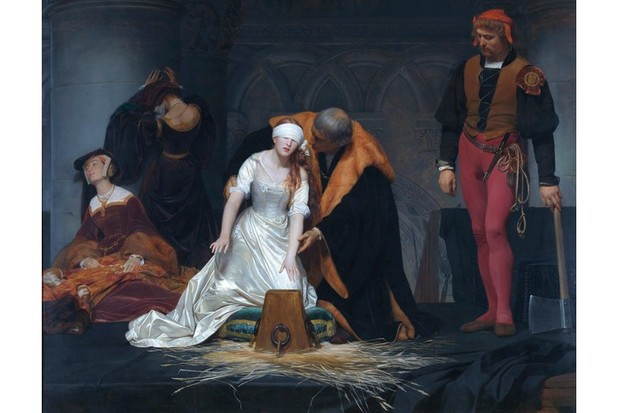
After Guildford’s swift execution in the morning it was Jane turn, after she has refused to meet Guildford to save him from pain she had the traumatic opportunity to see her husband’s lifeless body be carried back towards the towers chapel ready for burial. Artists, authors, poets and so many more creatives had tried their hand at depicting her last moments through their chosen medians, many decades after her death.
The National Gallery - The Execution Of Lady Jane Grey By Paul Delaroche
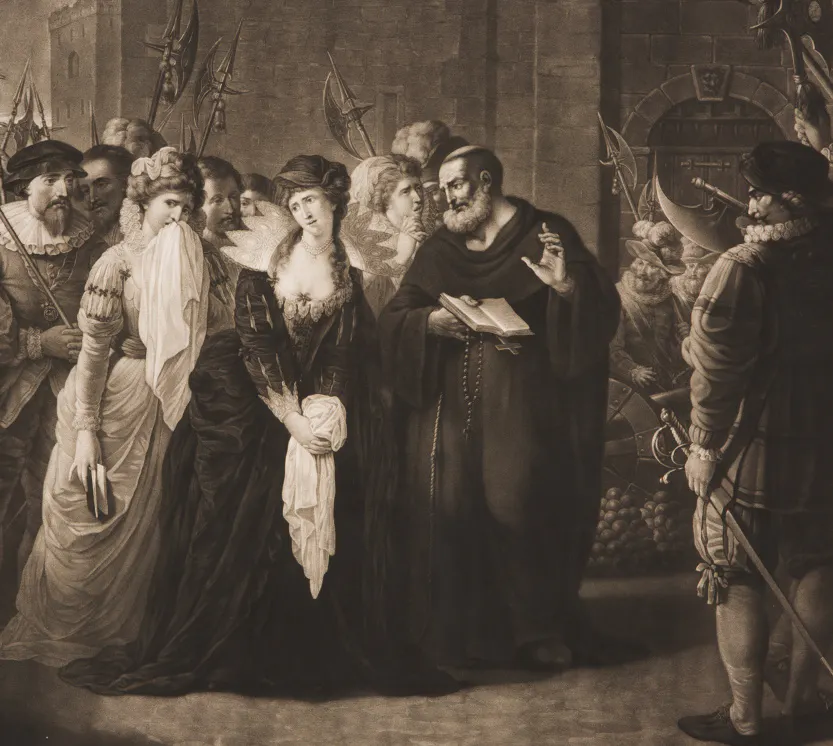
For example this painting by Paul Delaroche that focuses on her final moments after her speech and prayers when she became overthrown with fear after not being able to find the block and crying out for help. “What shall i do ? Where is it”. Others focused on the crowds reactions such as Valentine Green in 1786.
But is she a victim or the protestant martyr?
Right up until the 19th century, young Jane was seen globally as a protestant martyr and a symbol of female virtue. One who would die for her faith without hesitation for it to change. But in reality this title could also be harmful, as she didn’t chose that path for herself and was manipulated and used as a pawn because of her faith. The 19th century started to see her depicted as the victim in her story and highlighted her personal characteristics as her own and not ones perfect for the throne.
Being a young woman in Tudor times didn’t give Jane much of a chance to rebel against the opinions and views those above her had whilst they pathed the way for her. Although she didn’t like to conform she had no choice for it was her role, and even all the way up until her death she remained the role model she was groomed to be, thanking her people and admitting although she acted in innocency her actions were those of treason, commanding her death.
Today, her body lay to rest in the Church of St Peter ad Vincula on the north side of Tower green.


Comments